Essay
The Anthropology of Fake: Fashion, Imitation and Authenticity
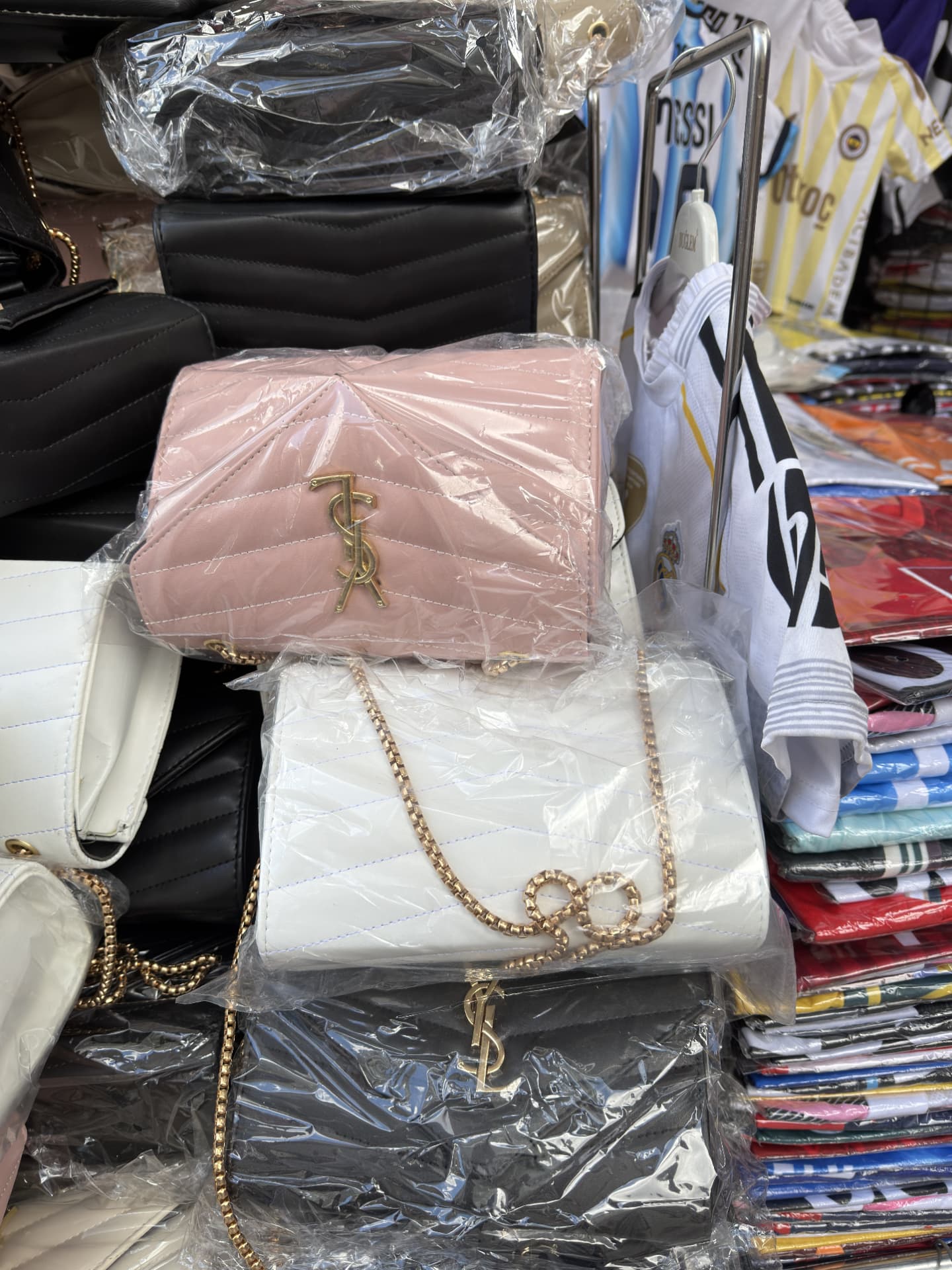
What makes a fashion object fake?
The most immediate answer seems straightforward. A counterfeit handbag is fake because it claims an origin it does not possess. Its logo refers to a fashion house that did not produce it. Its material form imitates an authorised original. Authenticity, from this perspective, appears to be a relatively stable quality: one object is original and another is its reproduction.
Anthropologically, however, the distinction becomes considerably less stable.
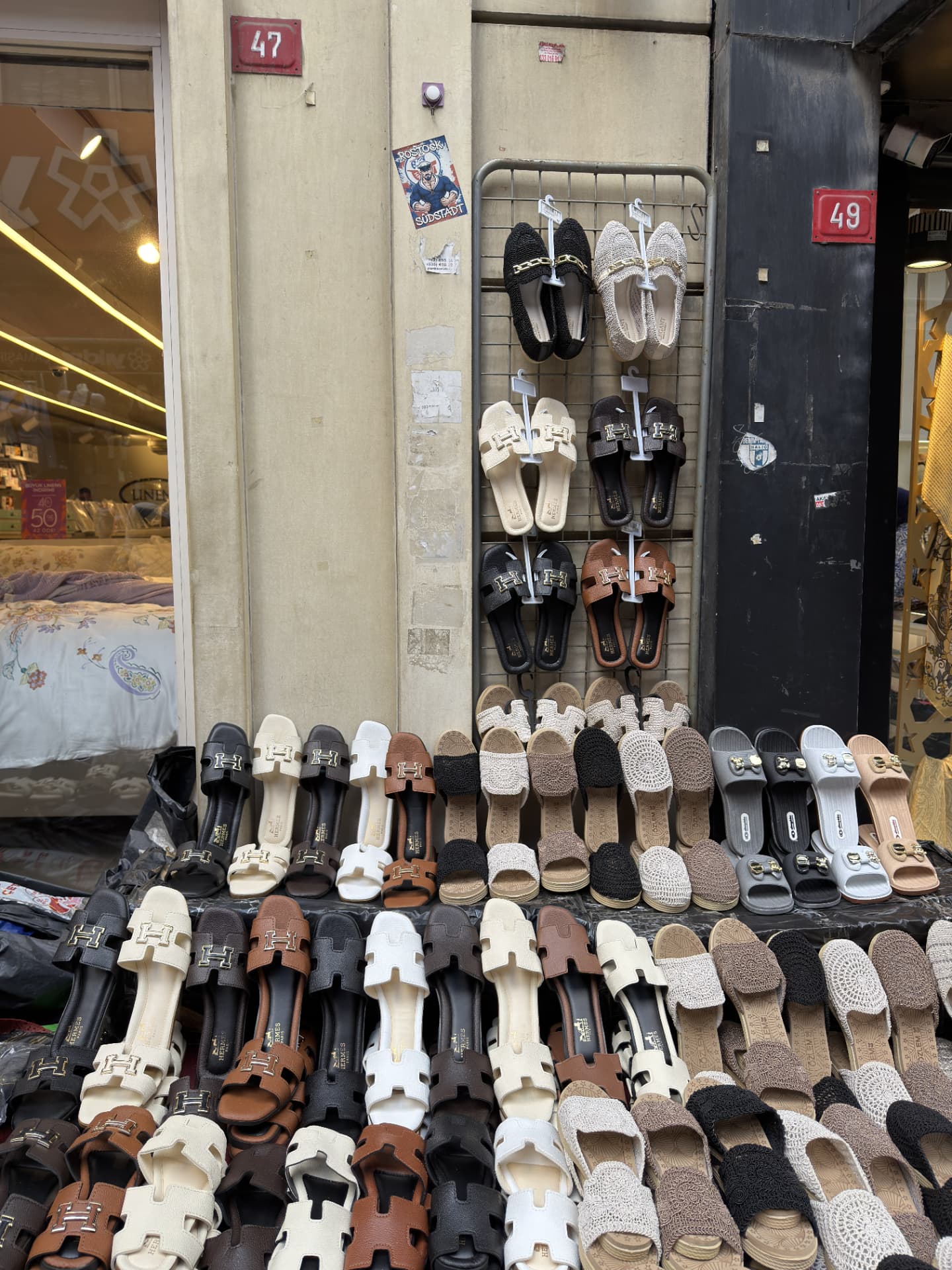
Fashion is itself organised through imitation. Trends emerge through repetition. Designers continually reference existing garments and historical silhouettes. Subcultural aesthetics migrate into commercial fashion. Luxury designs are translated into mass-market forms, and past collections return as contemporary references. Even individual style, often understood as an expression of personal authenticity, is assembled through collectively recognisable aesthetic codes.
The fake therefore presents a useful anthropological problem precisely because it appears to violate a principle — originality — that fashion itself struggles to maintain.
Rather than asking simply how we distinguish a counterfeit from an original, we might ask something broader: Why does originality matter so much within a cultural system fundamentally dependent upon imitation?

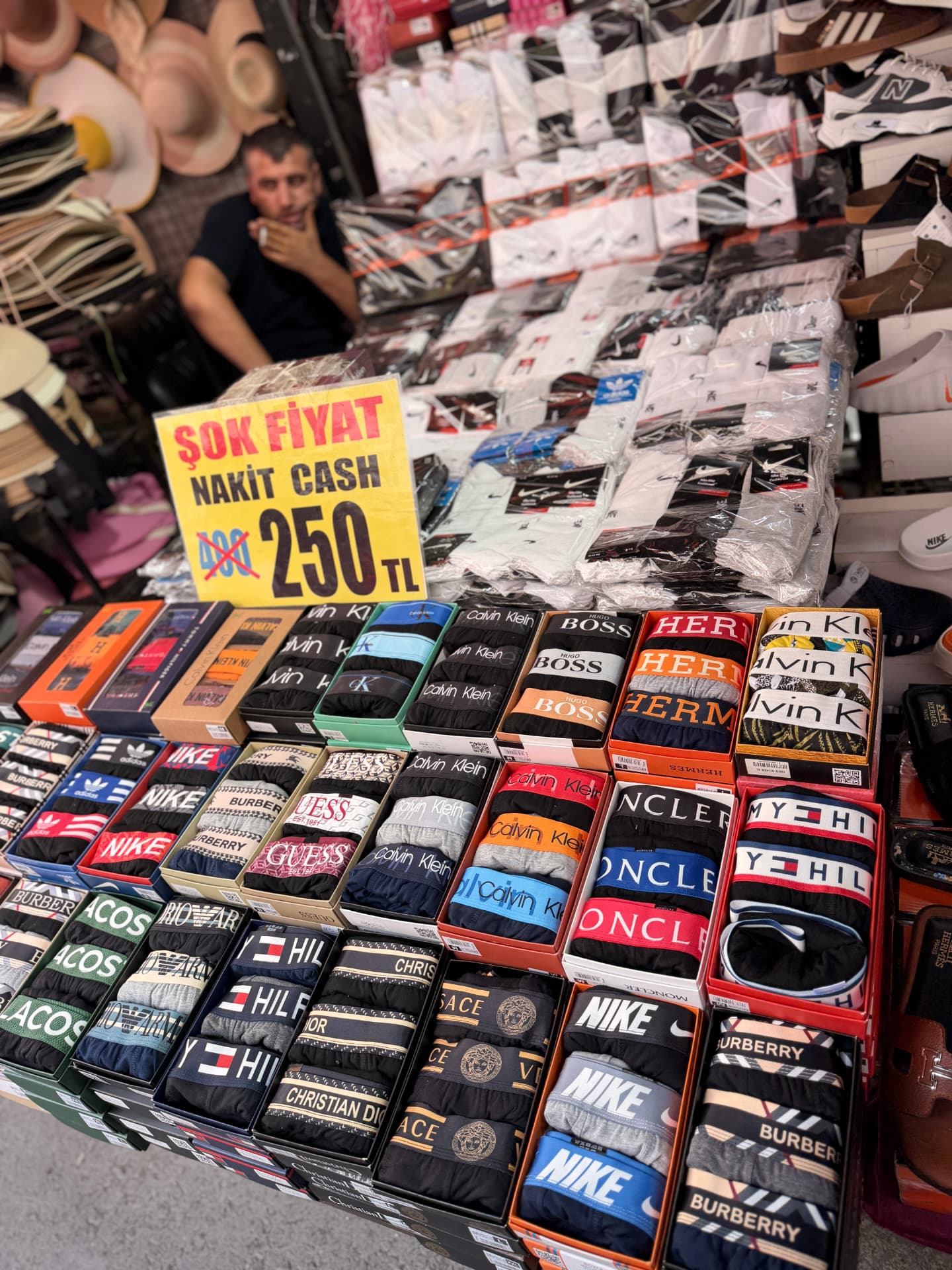
In his 1904 essay Fashion, Georg Simmel describes fashion as emerging from a fundamental contradiction in social life: human beings simultaneously want to belong to a group and distinguish themselves from it.
Fashion satisfies both desires.
By wearing what others wear, we demonstrate belonging. Clothes allow us to become socially legible: punk, bourgeois, intellectual, conservative, fashionable, wealthy, alternative. But fashion also provides the possibility of differentiation. We do not simply want to resemble others: we want to resemble particular others while distinguishing ourselves from everyone else.
Fashion therefore produces an unusual social mechanism in which sameness and difference are mutually dependent.
Simmel was particularly interested in the relationship between fashion and class. In his account, fashions adopted by socially dominant groups are gradually imitated by groups below them. Once this imitation becomes sufficiently widespread, the original group abandons the style in favour of another.
The fashionable object consequently contains the conditions of its own disappearance.
Following fashion gives us a ready-made form through which we can participate in collective life. Yet fashion also requires difference. Once everybody adopts something, its ability to distinguish begins to disappear. This creates fashion's perpetual movement.
A style appears.
A relatively small group adopts it.
Others imitate them.
The style spreads.
As it becomes increasingly common, its capacity to communicate exclusivity declines. Something new must emerge.
The fashionable object is therefore caught in a strange temporal condition: it desires to be copied, but not too much.
Without imitation, there is no fashion. With too much imitation, fashion dies.
The fake is not external to this system. It is almost its logical conclusion.
The Desire to Belong
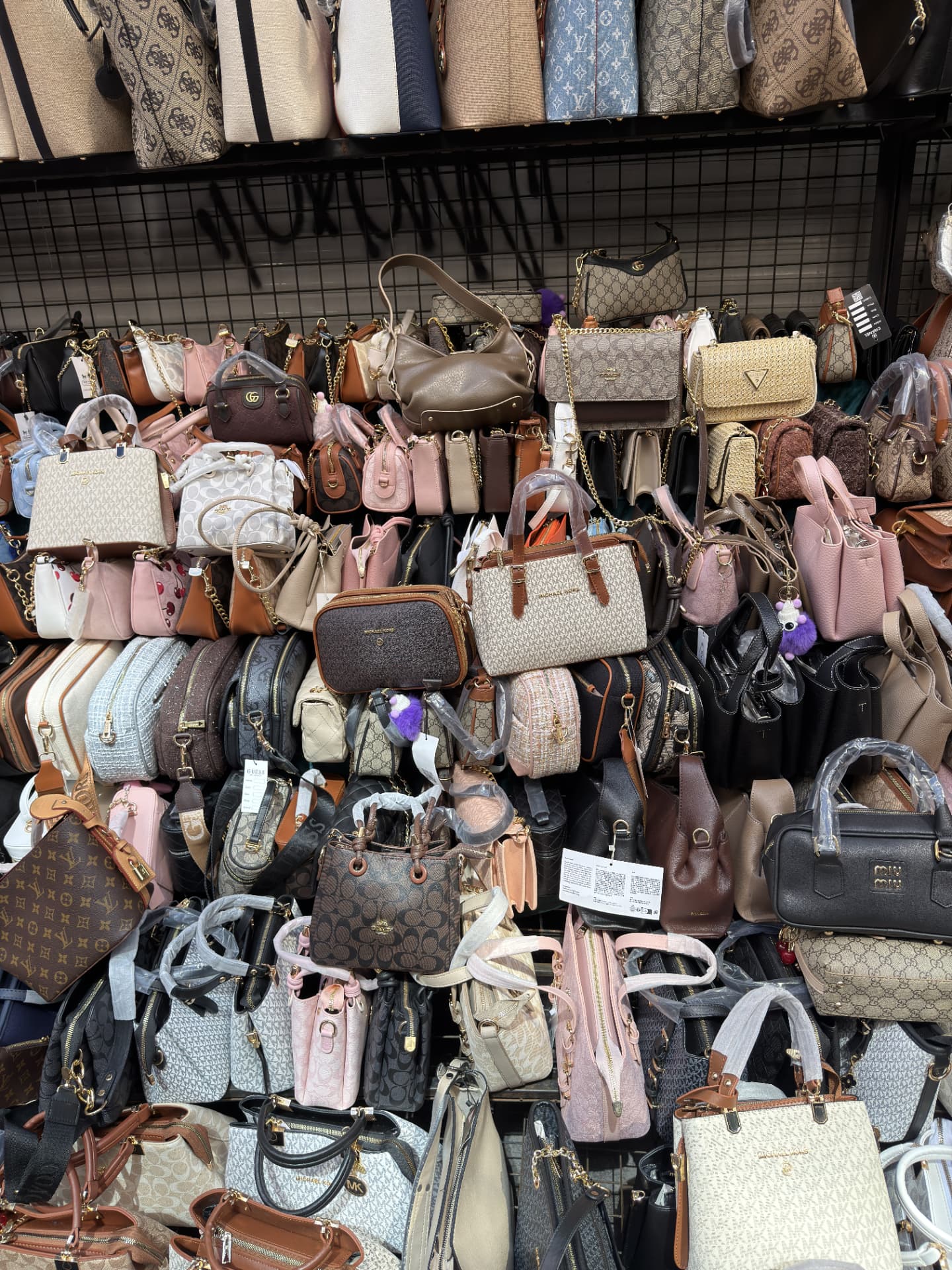
Consider the counterfeit luxury handbag.
Its function cannot be adequately understood by comparing materials alone. A highly convincing counterfeit may reproduce the dimensions, colour, logo, hardware and general appearance of its authorised equivalent. What remains different is provenance: who manufactured it, through which institutional system it circulated, and whether the fashion house recognises it as one of its objects.
Yet the counterfeit consumer is rarely interested only in reproducing leather and stitching.
The logo matters because it has already accumulated meaning. It can signify economic capital, exclusivity, fashion knowledge, membership in a particular social world, or aspiration towards one.
Here the counterfeit reveals something important about the original. The extraordinary value of a luxury object cannot reside exclusively in its physical properties. If another object can approximate those properties at a fraction of the price, then a significant part of the original's value must exist within a wider symbolic system.
Thorstein Veblen's analysis of conspicuous consumption is useful here. For Veblen, consumption among the leisure classes does not simply satisfy material needs. Goods become socially valuable partly because they make economic capacity visible. The expensive object communicates the ability to possess the expensive object.
Luxury fashion intensifies this relationship between economic value and visibility.
The counterfeit intervenes in that relationship.
It separates, at least visually, the sign of economic status from the economic expenditure traditionally required to acquire it.
A person may therefore access the appearance of luxury without accessing luxury through its authorised economic channels.
This helps explain why counterfeits can provoke reactions disproportionate to their material difference from originals. They disturb the presumed relationship between appearance and social position.
The symbol has escaped the hierarchy that produced it.
Taste and the Ability to Recognise
Yet fashion hierarchy does not depend on money alone.
Pierre Bourdieu's Distinction demonstrates how aesthetic judgement participates in social classification. For Bourdieu, taste is socially learned. What appears to be individual preference — what we consider elegant, vulgar, beautiful, excessive or sophisticated — is connected to class position and cultural capital.
Fashion therefore does not merely separate those who can afford particular objects from those who cannot. It also separates those who supposedly know from those who do not.
This is why discussions of fake fashion so frequently revolve around recognition:
You can tell from the leather.
The stitching is wrong.
That model was never produced in that colour.
The logo is slightly too large.
These observations do more than authenticate an object. They authenticate the person making the observation.
Knowing how to identify the fake becomes a form of cultural capital.
The distinction between real and fake consequently creates another distinction: between those capable of recognising the difference and those who are supposedly fooled by it.
This is particularly important because contemporary luxury increasingly operates in a world where the most obvious markers of wealth can be purchased, copied and circulated rapidly. Distinction therefore often moves towards subtler signs. Logos become smaller. Certain brands become desirable precisely because they are recognisable only to those already familiar with them. Materials, cuts, archival references and limited releases become codes.
The less obvious the distinction is, the more cultural knowledge is required to recognise it.
The ultimate luxury may therefore not be being seen by everyone, but being recognised by the right people.
Quiet Luxury and Restricted Legibility
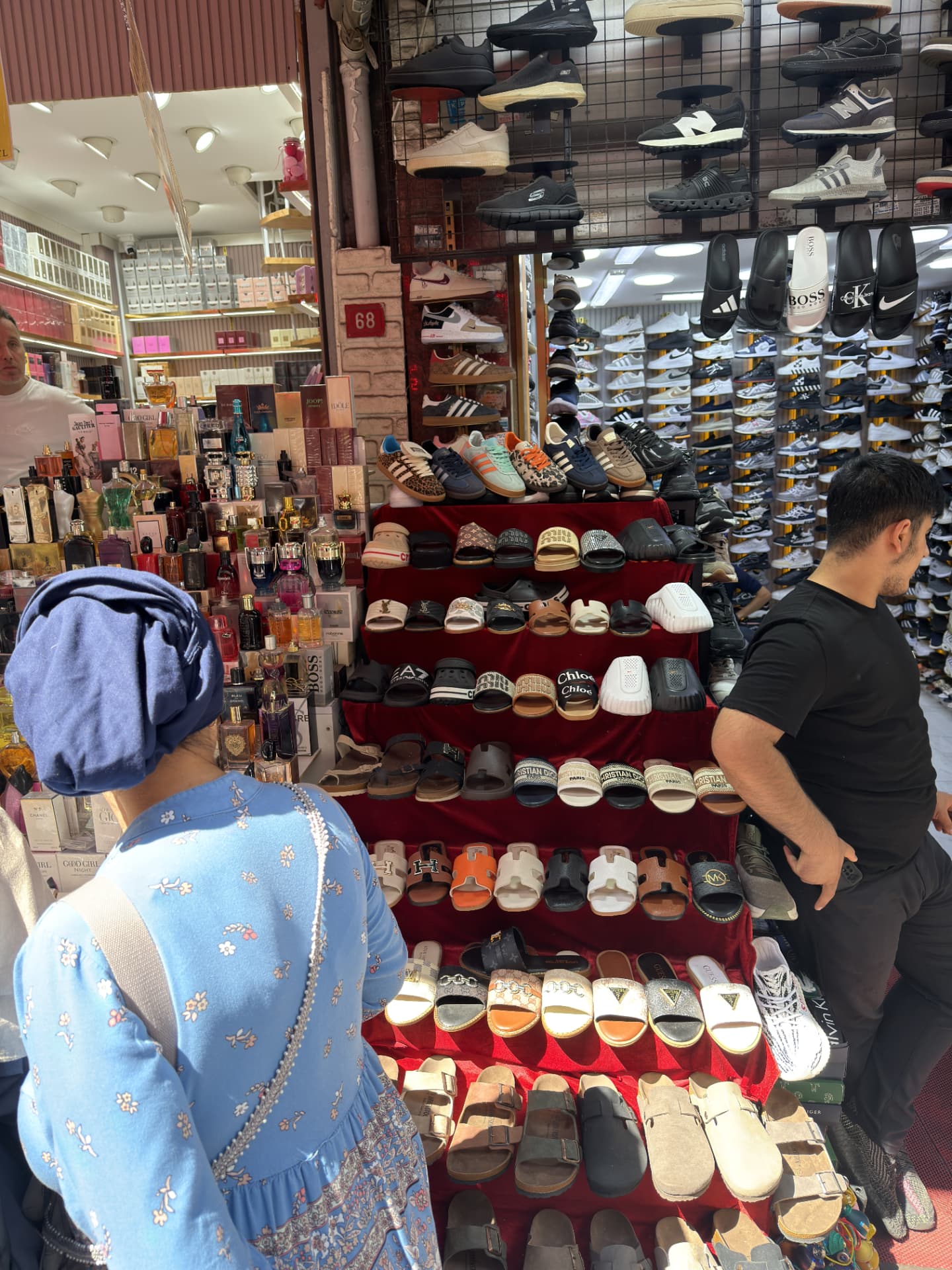
The recent language of “quiet luxury” illustrates this particularly clearly.
At first glance, quiet luxury appears to reject conspicuous consumption. Logos disappear. Colors become restrained. Silhouettes appear simple. Attention shifts toward fabric, construction and supposedly timeless design.
Yet the absence of an obvious logo does not necessarily represent the absence of status.
It may instead produce a more exclusive form of recognition.
A heavily monogrammed handbag can potentially be recognised by almost anyone. A seemingly anonymous cashmere coat costing several thousand euros may be recognisable only to those already familiar with the designer, material, cut or collection.
Its symbolic effectiveness depends upon restricted legibility.
The garment communicates, but selectively.
Read through Bourdieu, quiet luxury therefore represents less an escape from distinction than a refinement of it. Cultural capital becomes increasingly important precisely because economic value has become less visually explicit.
The ideal audience is no longer everyone.
It is those capable of recognising the code.
Fashion as a System of Signs
Roland Barthes allows us to push this argument further.
In The Fashion System Barthes treats fashion as a system through which garments acquire meaning. Clothes do not communicate naturally. Their meanings are culturally produced through images, descriptions, magazines, classifications and associations.
A black dress does not intrinsically mean elegance.
Cashmere does not naturally mean refinement.
A particular handbag does not inherently signify wealth.
These associations must be socially constructed and repeatedly reproduced until they begin to appear self-evident.
The counterfeit is possible precisely because these meanings can become detached from the authorised object.
If a logo has acquired sufficient symbolic power, reproducing the logo allows another object to participate — however precariously — in the same signifying system.
In this sense, the counterfeit does something theoretically interesting — it reproduces the sign while breaking the authorised relationship between sign and origin.
This is why describing a fake simply as an inferior object misses much of its cultural function. A counterfeit succeeds not necessarily when it reproduces every material property of the original but when it reproduces enough of its signs to become socially readable.
From Fake to Dupe
Contemporary fashion has also produced an interesting linguistic transformation. The word fake increasingly competes with a much friendlier word: dupe.
The difference is significant.
“Fake” implies deception. A fake Chanel bag pretends to be Chanel.
A dupe often makes no such claim. It may reproduce the silhouette, colour, proportions or general aesthetic of a desirable object while openly belonging to another brand.
Yet socially, the dupe performs a similar function: it gives access to an aesthetic without requiring access to the original.
The popularity of dupes reveals a shift in the meaning of authenticity. Consumers can simultaneously acknowledge that something is an imitation and value it precisely because it successfully reproduces the appearance of something inaccessible.
There is no deception because everybody is in on it.
The phrase “I found a dupe” can even contain a certain pride. The consumer demonstrates not that they have been fooled, but that they understand the fashion system well enough to reproduce an expensive aesthetic economically.
Here imitation becomes knowledge.
Fashioning the Self
This leads to another anthropological problem. When we describe clothes as fake, are we sometimes also describing the person wearing them?
Fashion is deeply involved in the construction of identity. Through dress, bodies are transformed into socially interpretable bodies. Clothing communicates gender, profession, class aspiration, belonging, rebellion, sexuality, age and taste before a person necessarily says anything.
But because clothing can be acquired, identity can also be performed.
A person can dress like an intellectual without being one, look wealthy without possessing wealth, adopt punk aesthetics without participating in punk culture, or buy the visual vocabulary of “old money” without inheriting anything at all.
Fashion therefore makes social identity unusually mobile.
This mobility creates suspicion.
We frequently hear accusations such as trying too hard, pretentious, poser, wannabe or fake. These accusations appear when observers perceive a gap between someone's appearance and what they believe that person “really” is.
The fake, therefore, may not reside in the garment.
It may emerge from a perceived mismatch between object, body and identity.
An authentic designer jacket can participate in an “inauthentic” performance, while a second-hand or counterfeit object can become deeply incorporated into someone's personal identity.
Fashion demonstrates that authenticity is not simply something we own. It is something others grant or refuse us.
The Paradox of Individuality
Simmel's argument becomes particularly powerful here.
Modern fashion repeatedly promises individuality: express yourself, find your style, be different. Yet the very forms through which individuality is expressed are collectively produced.
Even refusing fashion can become fashion.
The person who rejects trends and wears only vintage clothing joins an aesthetic community. The person who adopts “normcore” participates in a recognisable visual code. Anti-fashion becomes fashion, individuality becomes a category that can itself be reproduced.
The paradox is that we often construct our uniqueness through objects that thousands of other people also possess.
Fashion does not solve the contradiction between individuality and conformity. It allows us to live inside it.
And perhaps this is where the anthropology of fake becomes most interesting. The fake is usually imagined as an imperfect copy of an authentic original. But fashion suggests that the relationship may be more complicated. Fashion itself operates through repetition, imitation and citation. An individual copies a group in order to become an individual. A designer copies the past to create something new. A subculture develops a style that is copied by fashion houses and then sold back to the public. A luxury object becomes desirable because others recognise it, then loses some of its distinction precisely because too many people recognise and reproduce it.
There is no fashion without copies.
The fake is fashion revealing how fashion works.
It exposes the fact that value does not reside entirely in material objects, that originality is always entangled with repetition, and that clothing acquires meaning through collective recognition. Most importantly, it reveals that the desire to be different and the desire to belong are not opposing forces within fashion.
They are the same process.
Bibliography
Barthes, Roland. “The Fashion System”. Translated by Matthew Ward and Richard Howard. Berkeley: University of California Press, 1990.
Bourdieu, Pierre. “Distinction: A Social Critique of the Judgement of Taste”. Translated by Richard Nice. Cambridge, MA: Harvard University Press, 1984.
Simmel, Georg. “Fashion.” International Quarterly 10, no. 1 (1904): 130–155.
Veblen, Thorstein. The Theory of the Leisure Class: An Economic Study in the Evolution of Institutions. New York: Macmillan, 1899.